NW
Nolan Winslow
IllustratorThe four-view sheet is the actual deliverable for me.
Getting all of it in one pass is the whole reason I switched.
The hard part of an AI character is not the first image, it's the second one that has to match. Feed in references, then generate a portrait, a full-body shot, or a sheet with four angles of the same character on one page.
AI Character Generator
AI Character Generator
The hard part of an AI character is not the first image, it's the second one that has to match. Feed in references, then generate a portrait, a full-body shot, or a sheet with four angles of the same character on one page.

Add your references
Attach up to ten images of the same person or character. Varied angles help more than a single flawless shot.

Describe and choose a view
Write who they are, pick a style, then choose portrait, full body or a four-view character sheet.

Generate and compare
Check the face, hair, outfit and accessories against your references, then download at the aspect ratio you need.
Generating one good character image is easy. Generating the same character twice is where most tools quietly fall apart, and where the workarounds get expensive.
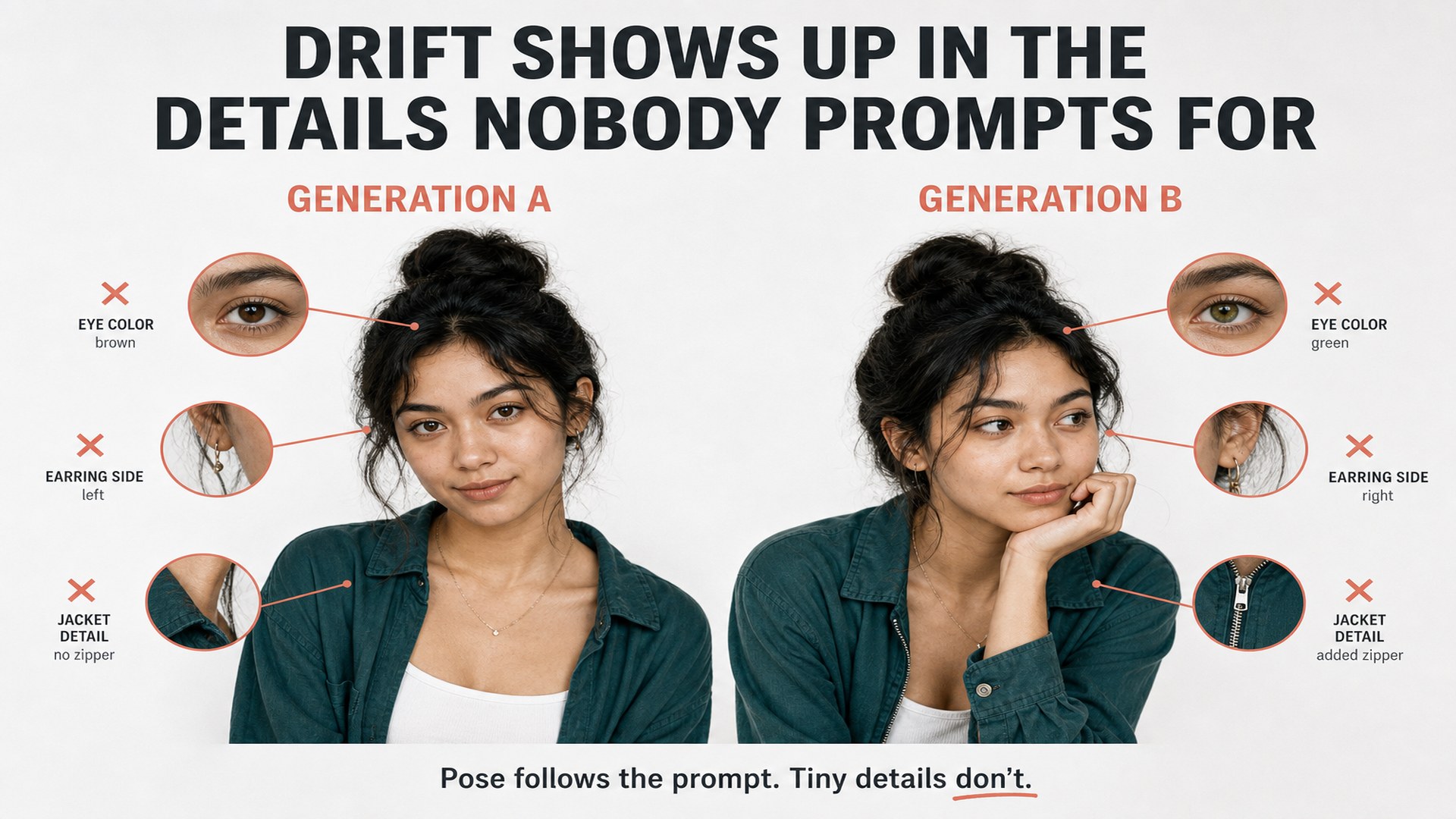
Regenerate a character and the pose changes as asked, but so do the things you never mentioned: eye colour shifts, a jacket gains a zip, an earring appears on the wrong side. Published comparisons of consistency tools weight face similarity around half the score, outfit around a third and style the rest, precisely because those are the parts that drift first and cost the most to fix downstream.
Try it now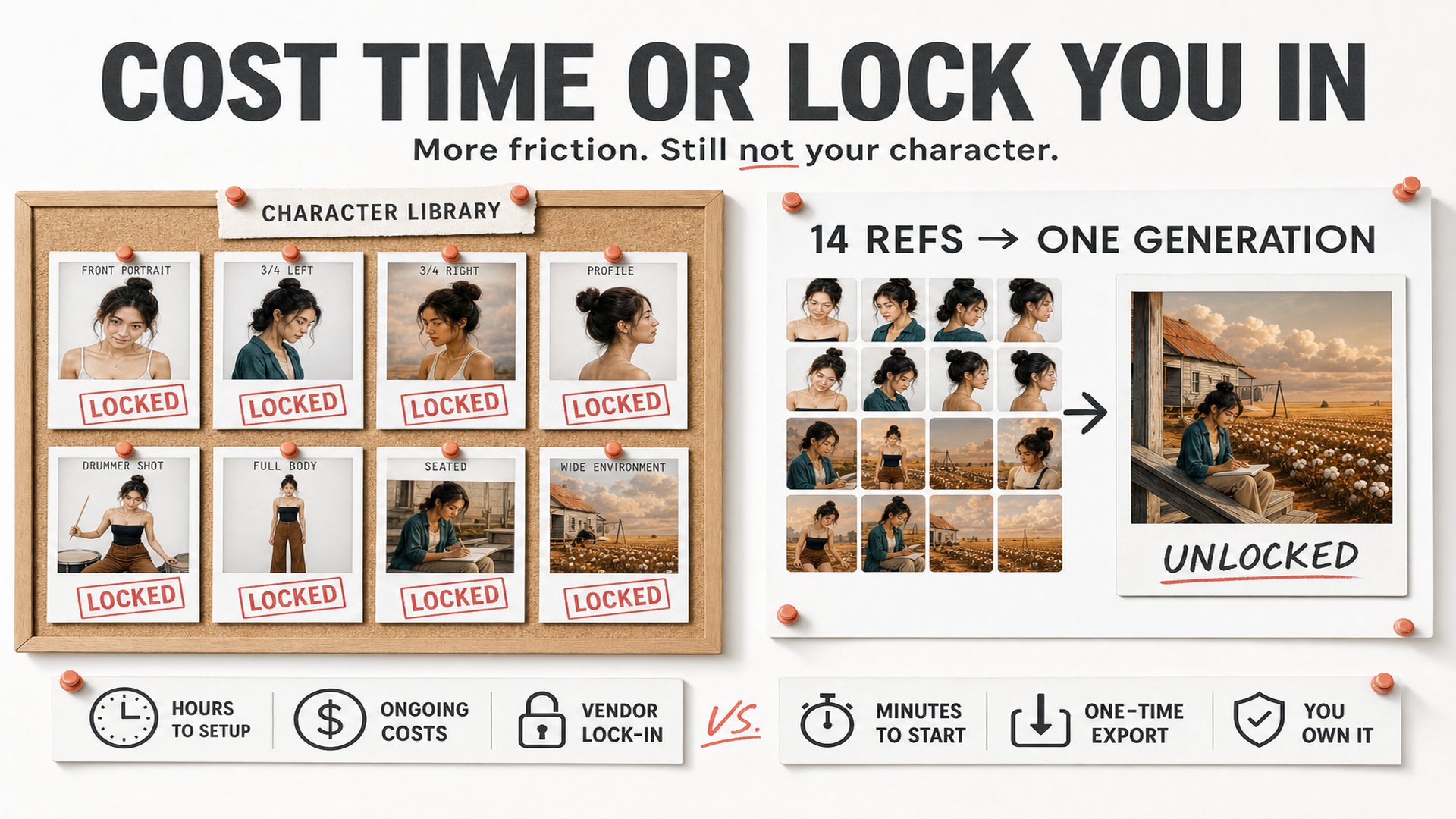
One answer is training a small model on twenty or more images of the character, which is accurate but needs the images to exist first and takes real setup. The other is a saved-character library, which works until you want the character somewhere the library does not reach. Both solve consistency by adding state. Feeding several references into a single generation solves a useful part of it with none.
Try it nowNo character library to maintain, no training run to wait for — the consistency comes from what you put in and what you ask for.
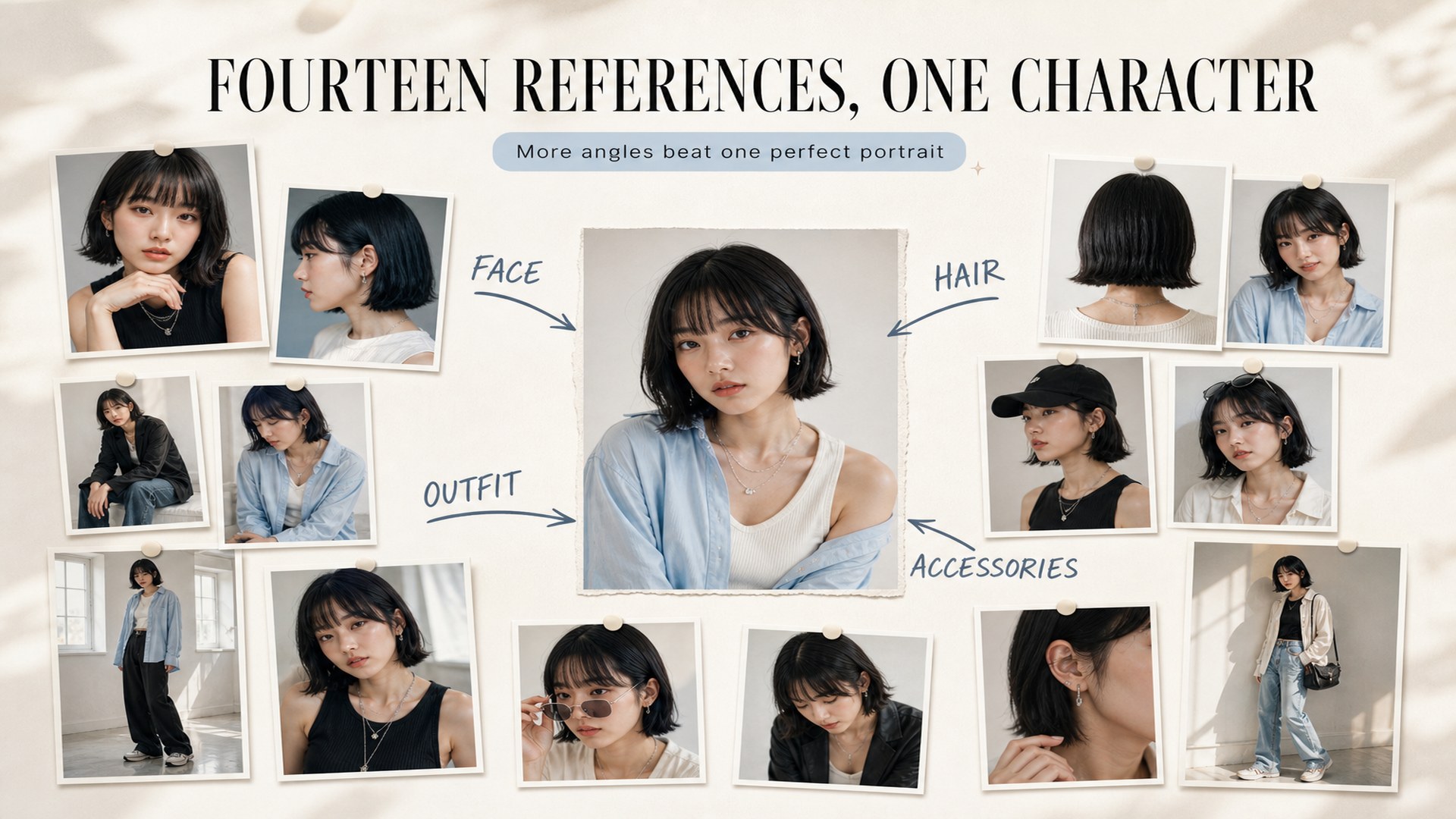
You can attach up to ten reference images to a single generation. More angles of the same person give the model more to agree with, which is why a handful of varied shots beats one perfect portrait. Faces, hairstyles, outfits and accessories are all steered by what you supply, and the prompt is written to hold them rather than treat them as loose inspiration.
Try it now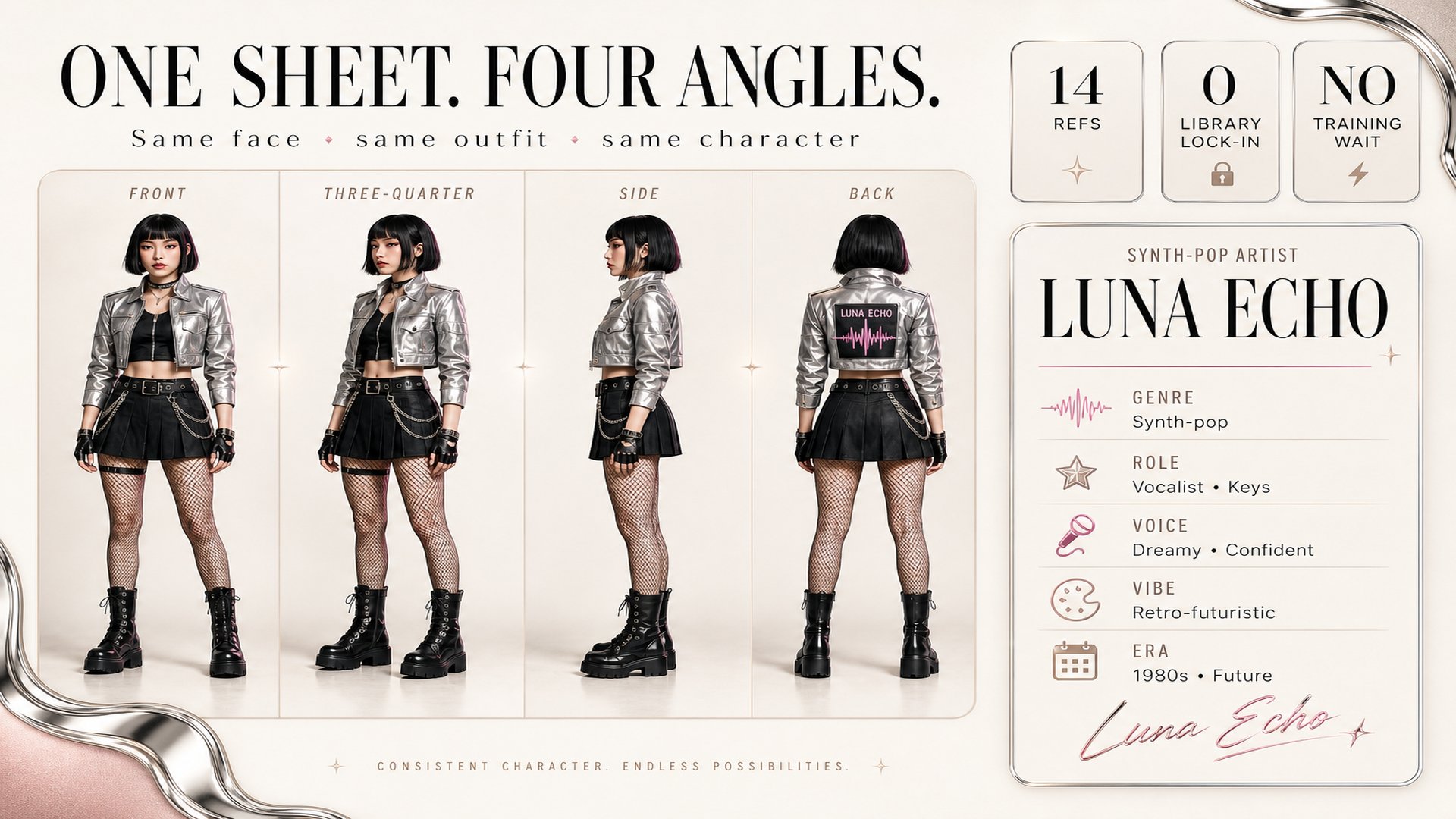
Ask for a character sheet and you get front, three-quarter, side and back views of the same character laid out on one flat background, with proportions, height and outfit held across all four. That's the output illustrators and game teams actually work from, and it's the case where consistency matters most — because all four views are visible at once and any drift is immediately obvious.
Try it nowCharacters are one piece. The same workspace covers cover art, logos, release visuals and names.
Create looping Spotify Canvas videos.
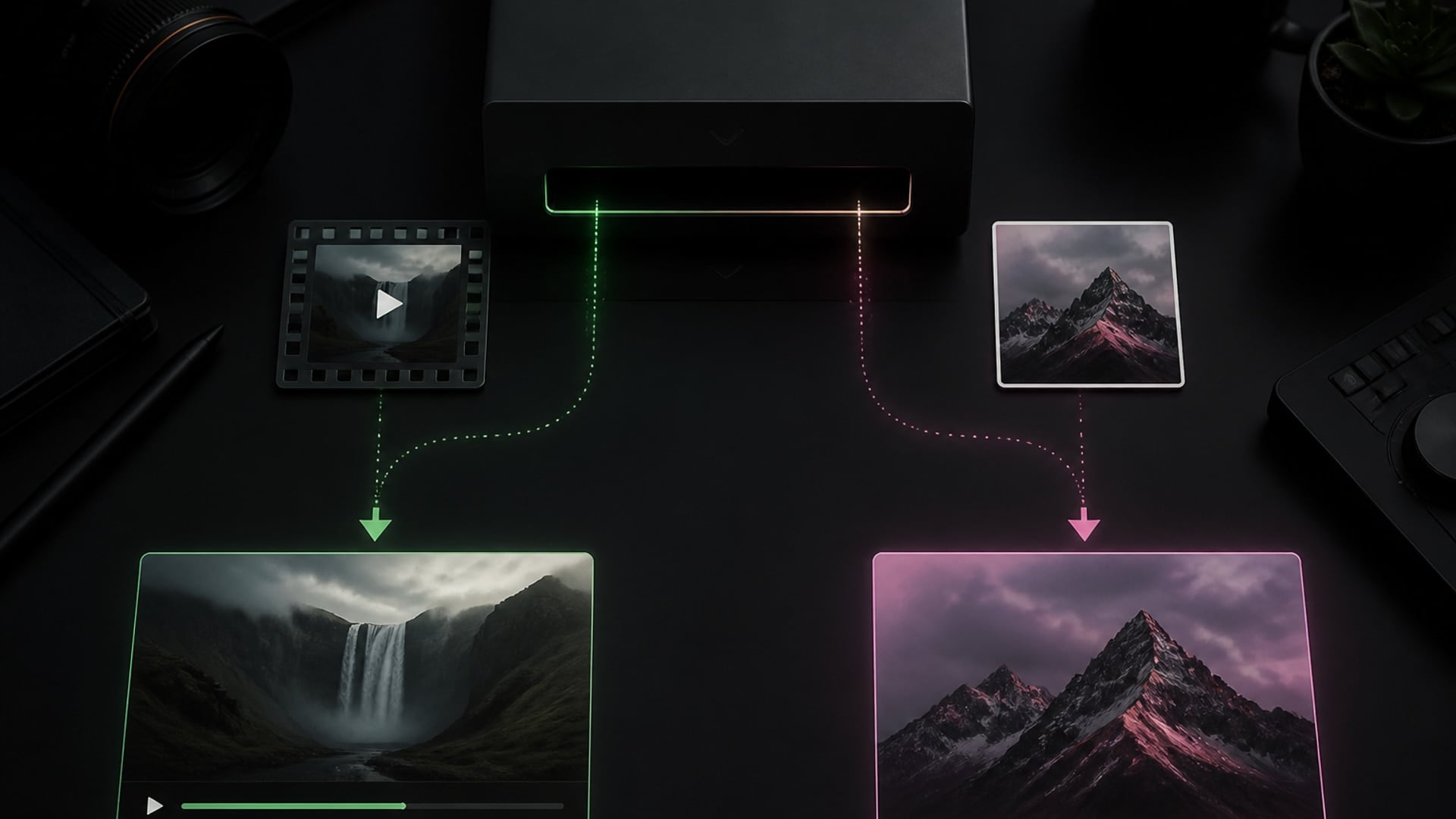
Replace the character in your video — the shot, camera move and motion stay put.
Remove clothes from photos — pose and background stay put.
Write complete, structured song lyrics in any genre — verses, hooks and bridges included.
Explore leading models for AI video, image generation, editing, and cinematic storytelling.
Create Wan 3.0 clips on Viralkey: native 1080p, 2–30 seconds, start/end frames, up to 20 mixed references, and audio generated with the picture.
Create cinematic MiniMax H3 clips on Viralkey: native 2K, up to 15 seconds, text-to-video, start/end frames, and up to nine reference images.
Generate short HD clips on Viralkey with start/end frame direction and up to 50 reference images. Built for music video scenes and performer shots.
Create cinematic Seedance 2.0 clips on Viralkey: native 4K, start/end frames, up to nine reference images, and built-in audio with lip-sync.
Anything that needs the same face more than once is where the work either compounds or falls apart.
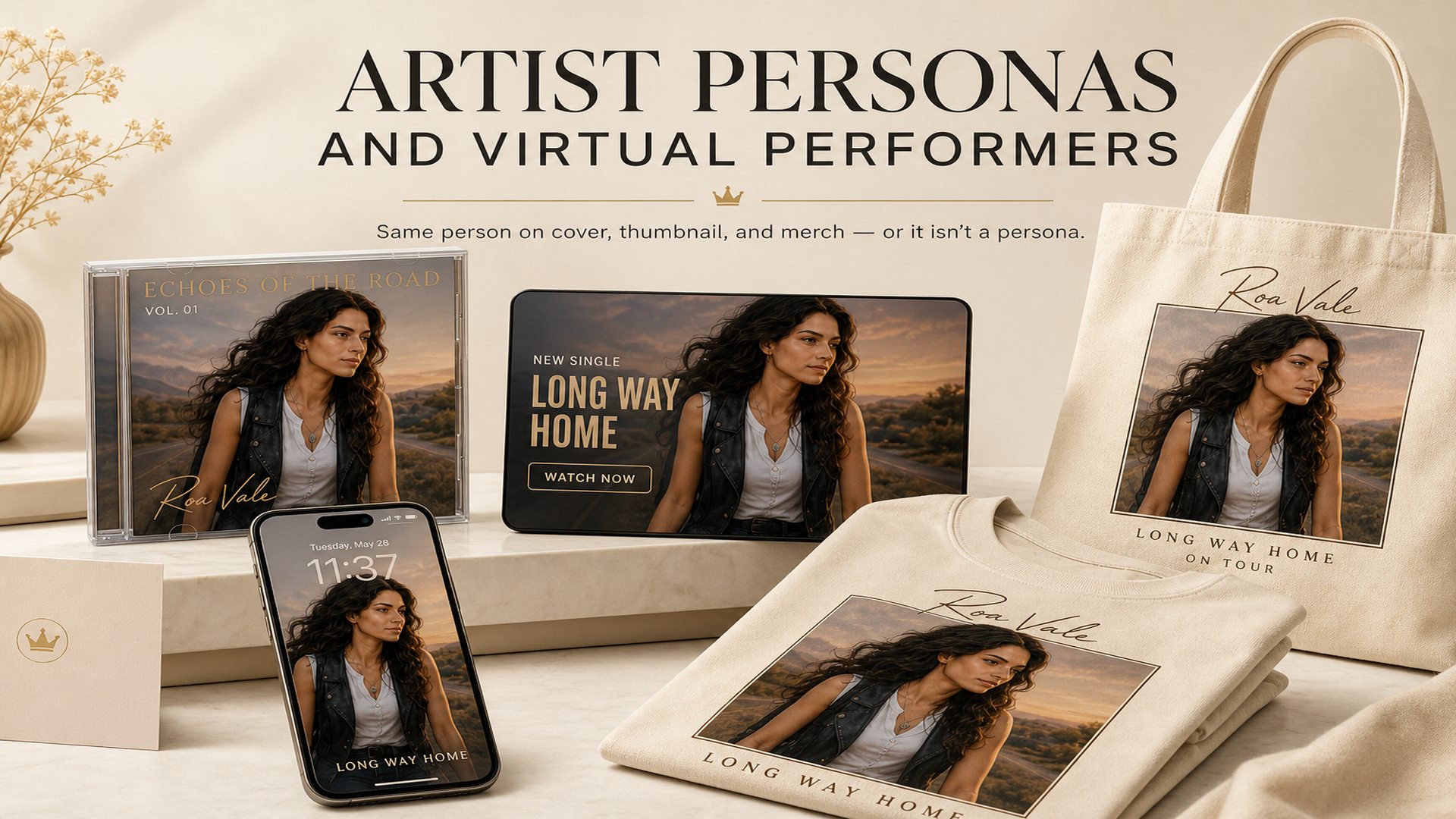
A persona only reads as a persona if it survives the artwork, the video thumbnail and the merch mock-up looking like one individual. Building it from references means the look is anchored to something you decided rather than to whatever the model produced first, and a character sheet gives you the reference pack every downstream piece can be checked against.
Try it now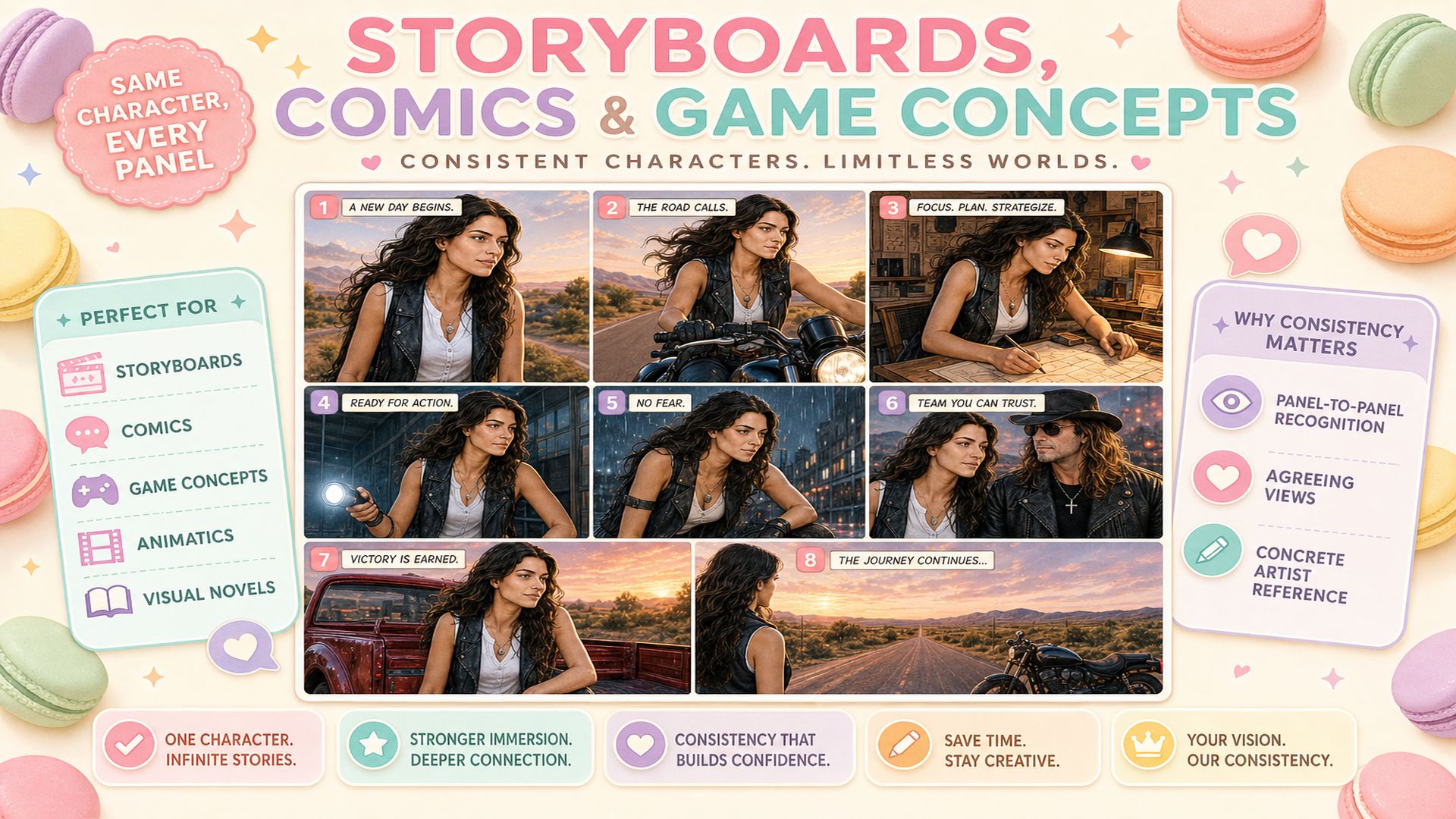
Sequential work lives or dies on the reader recognising the same person from panel to panel. Four agreeing views generated together give an artist or a downstream tool something concrete to match, which is far more useful than four separately generated images that each look good and collectively look like siblings rather than one person.
Try it nowNotes from creators who used this tool on real work.
Nolan Winslow
IllustratorThe four-view sheet is the actual deliverable for me.
Getting all of it in one pass is the whole reason I switched.
Elena Carrillo
Comic artistTen references sounds excessive until you try it.
Six varied shots and the face finally stopped wandering.
Emiko Hasegawa
Art directorNo character library to maintain is a feature, not a gap.
My references live in the project folder where they belong.
Shelby Fletcher
Game concept artistFront, three-quarter, side and back that actually agree.
That is the part every other tool got approximately right.
Ubaldo Gallardo
Virtual artistI built the persona from three photos and it has held across every piece of artwork since.
Shiori Endo
Storyboard artistIt says references steer rather than lock, which is honest and matches what actually happens.
Garrett Blackwell
Character designerThe style choice matters more than I expected.
Flatter styles drift less, and the page says so upfront.
Callum Beckett
Indie developerOne sheet gave our contract artist everything they needed.
Previously that was a half-day of back and forth.
Emory Thornbury
Music video directorBeing told it cannot promise uniqueness is the reason I trusted the rest of what it says.
More is generally better up to the limit of ten, but variety matters more than volume. Three shots from different angles, in different light, do more for consistency than eight near-identical portraits. If the character wears something distinctive, include at least one image where that detail is clearly visible.
Turn your ideas into reality with AI. Generate, refine, and innovate — creation starts here.